

Talking after a story: Questions that invite conversation rather than a test
Invite conversation after a story without turning it into a test. Open questions, thoughtful listening and examples from Mercan.
After a story, a rapid sequence of “Who was there?”, “Where did they go?” and “What happened next?” may feel like a way to check understanding. For a child, an enjoyable narrative can become a task requiring correct answers. If the aim is to hear their thinking, the questions change. Showing curiosity about one detail, waiting for a response and sharing your own interpretation can create a more reciprocal exchange. A conversation is not required after every reading either.
Start where the child left you
If a child returned to a picture or laughed at a character during reading, use that contribution as a starting point. “You looked at this part again. What did you notice?” follows their interest instead of working through a complete adult-prepared list. The child's attention can influence the direction of the conversation. If the answer is short, wait before asking for more. Pointing to an object or acting out a movement can also be a contribution.
Ergül, Sarıca and Akoğlu's Turkish review highlights opportunities for children to speak and the adult's role as an active listener in interactive reading [1]. At home, this means resisting the urge to finish a child's sentence. If they say “Scared,” you might respond, “Hearing a sound in the dark might have frightened them.” Then leave room for another contribution without immediately adding a test question.
Distinguish different kinds of questions
Remembering an event, interpreting it and imagining a possibility have different purposes. “What did they see beside the shell?” concerns information in the narrative. “Why might they have left it there?” asks for an interpretation. “What could happen if the story continued differently?” invites imagination. A child's invented answer should not be confused with a detail stated in the text. Accept different kinds of responses while keeping the purpose clear.
Use brief language. Rather than “Could you explain how the character's behaviour influenced everyone else's thoughts?”, try “What might the other character think when they see that?” If the question is unclear, return to a scene rather than repeating it more insistently. Looking at the picture together provides a context. Do not confuse difficulty with the wording and difficulty with thinking; a lack of response alone does not establish that the story was not understood.
Listen without supplying the answer
“They were very sad, weren't they?” offers the adult's answer. “What might they feel here?” leaves more room. When a child names a different emotion, ask “What made you think that?” People may interpret a scene differently, while details actually present in the narrative can still be checked together. An open-ended exchange does not mean that information in the story no longer matters.
Use an invitation when moving towards personal experience: “If you want, you could tell me about something this reminds you of.” If the child prefers not to, stay with the character. Fivush, Haden and Reese discuss family conversations about past experiences [2]. When drawing on that framework, avoid leading a child into completing an event they cannot remember. State your own recollection separately so the source of each account remains clear.
Try one short invitation
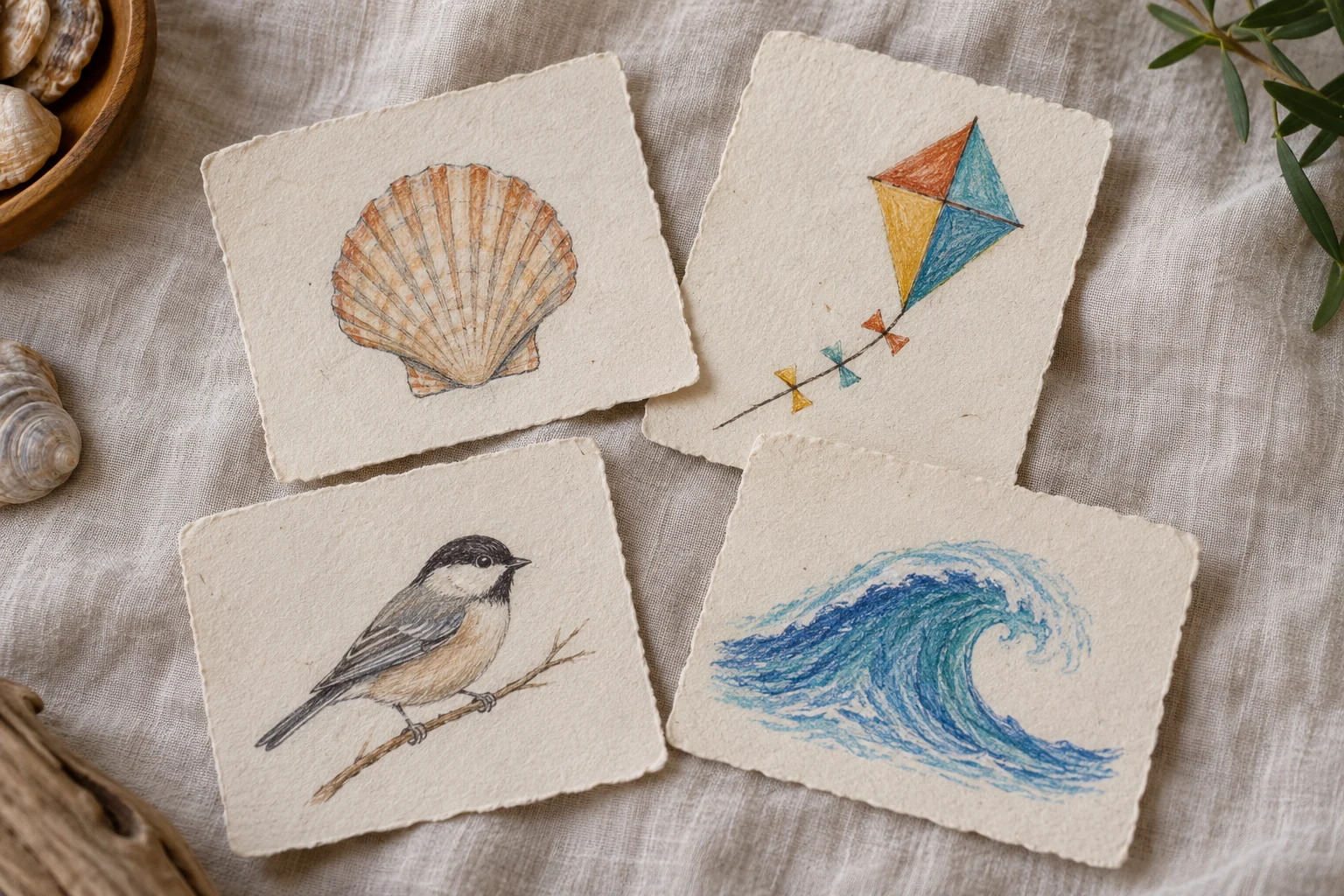
Choose just one option for an encounter: “Which detail stayed with you?”, “What would you ask a character?” or “What would you add to this story?” If no answer comes, do not immediately move to another question. A child may want quiet after listening. Offering an opportunity to speak is different from requiring speech. There is no need to set a target duration or number of responses.
Dowdall and colleagues' meta-analysis considers shared book reading interventions in relation to language development [3]. The questions here are adaptations for family conversation rather than exact versions of those programmes. Using research does not mean assigning a measured effect to each suggestion. Observe participation and keep the exchange a shared experience that the child can enjoy.
An example from Mercan's story
In “Three Stories of the Same Day,” family members remember different details of one outing. Instead of “Whose story is right?”, ask “What did each person notice?” The child may name a detail they like, and the adult can describe a different favourite. There need not be a winner between the interpretations. The narrative offers a starting point for hearing different perspectives together.
When using stories and activities in Story Globally collections, the conversation can remain brief. A colour choice or a detail in a search picture may open it again later. There is no need to complete all the questions and activities on one day. Responding genuinely to what a child says can offer a more meaningful family experience than finishing a prepared list. Both the child and the adult can influence where the conversation goes.
References
- Ergül, C., Sarıca, A. D. & Akoğlu, G. (2016). Etkileşimli Kitap Okuma: Dil & Erken Okuryazarlık Becerilerinin Geliştirilmesinde Etkili Bir Yöntem. Ankara Üniversitesi Eğitim Bilimleri Fakültesi Özel Eğitim Dergisi, 17(2), 193–206. View source
- Fivush, R., Haden, C. A. & Reese, E. (2006). Elaborating on elaborations: Role of maternal reminiscing style in cognitive and socioemotional development. Child Development, 77(6), 1568–1588. View source
- Dowdall, N., Melendez-Torres, G. J., Murray, L., Gardner, F., Hartford, L. & Cooper, P. J. (2020). Shared picture book reading interventions for child language development: A systematic review and meta-analysis. Child Development, 91(2), e383–e399. View source
Continue the topic with a story
Turn what you read into a story, a coloring page and a short chat with your child.
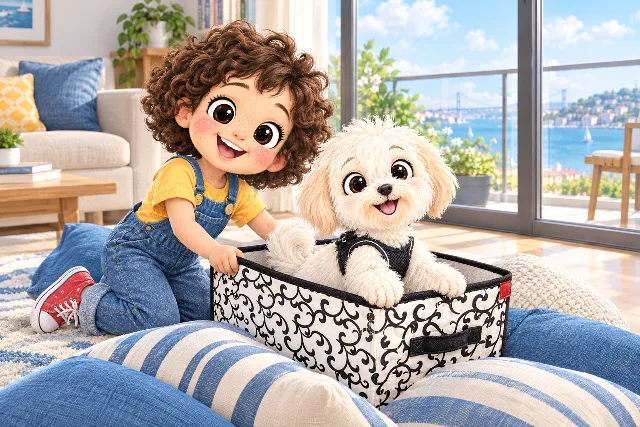
Carlos and the Box Boat — family set
Children see Carlos choose his torn box over a brand-new bed; they learn to read an animal's feelings from what it does, think about why an old, loved object matters, and discover …
Explore →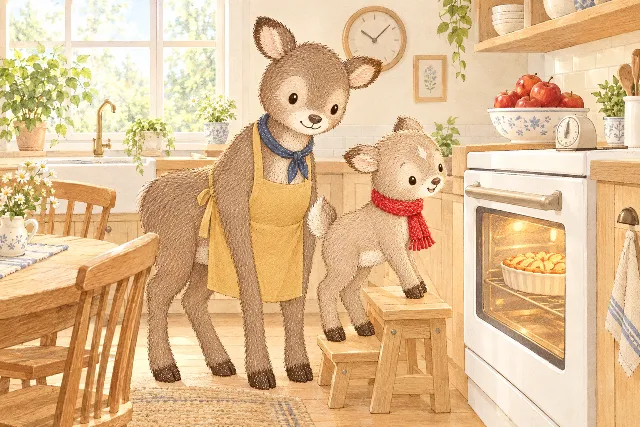
Riko and the Cake in the Oven — family set
Children bake a cake with Riko and his dad and notice that waiting is hard; when Riko gets bored, they see him find something to do (drawing a cake, building one from blocks) and k…
Explore →
Riko and the Kite That Waited for the Wind — family set
Children feel sad with Riko when his kite won't fly; they try putting the feeling into words, noticing the reason (no wind) and waiting patiently with Mum, and see Riko say "Come a…
Explore →