
My child leaves activities unfinished: When to help and when to pause
Practical guidance on small cues, difficulty and breaks when children leave activities unfinished, informed by developmental research.
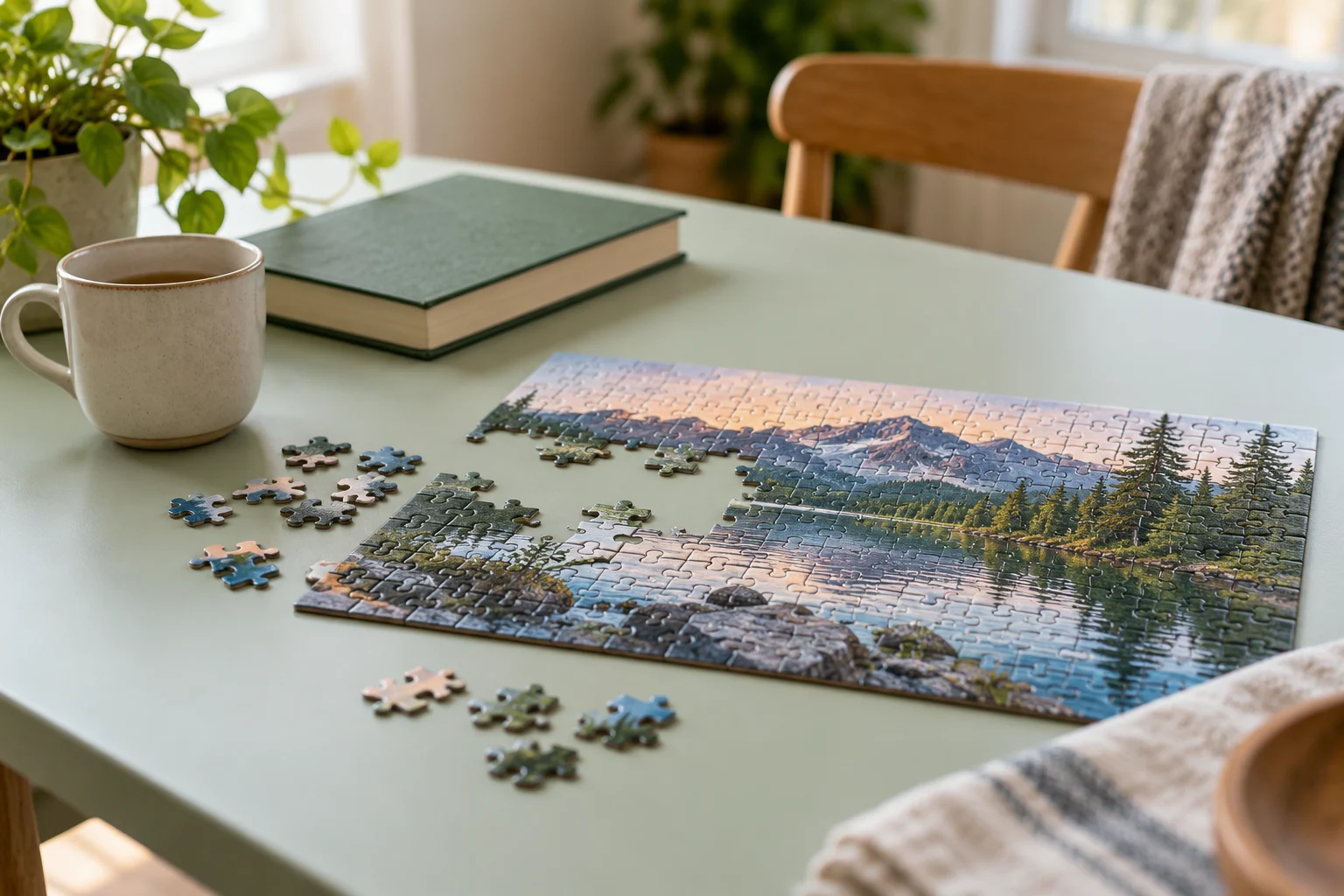
When a child turns away with only a few puzzle pieces remaining, an adult may think, “A little more effort and it would be done.” But leaving something unfinished cannot be explained by reluctance alone. An instruction may be unclear, the difficulty may have increased or the child may be tired. Sometimes their interest has simply moved elsewhere. The useful question is what support they need at that moment. Help and a break can be considered together.
Notice where the child stopped
If they leave before beginning, do they understand what to do? If they stop after several attempts, what difficulty appeared? Near the end of a long activity, might they be tired? The same behaviour can mean different things in different circumstances. Observe the steps leading to it rather than only the result. “What were you trying to do here?” helps clarify a goal. A pointed-out piece may provide information even when there is no verbal answer.
Diamond's review of executive functions discusses cognitive processes alongside conditions such as sleep and stress [1]. It supports avoiding conclusions about attention or willpower from one unfinished activity. Parents can review the circumstances that day. Hunger, background noise and task length are possibilities to consider; a blog article cannot identify which explains an individual response.
Make a small piece of help concrete
“Pay a bit more attention” may not show the child what to do. You might suggest following a line in a puzzle, beginning with one part of a search picture or restating an instruction as a single step. Offer a small cue, then wait. Reduce help when the child engages again. An adult finishing the task and a child using support to make another attempt are different experiences. Let the observed need guide the amount of assistance.
Seçer and Kaymak Özmen's attention programme study examined a structured intervention with a particular sample [2]. It does not recommend making a child finish a home activity under every circumstance. Findings about attention training should not become a justification for removing breaks. The family suggestions here form a separate, flexible approach rather than the research protocol itself.
Talk about taking a break
If a child repeats the same attempt, struggles to respond or becomes increasingly unsettled, offer a pause. “Would you like to stop for a while or try again with a hint?” gives two concrete options. Observe the response. Finishing is not always a condition for taking a break. Returning another time or choosing another experience is possible. Every pause need not be labelled a failure.
During an intense emotional moment, aim for a safe, calm response rather than a lengthy explanation. Set boundaries on behaviours such as throwing pieces while acknowledging frustration. Discuss the next option once the child settles, without requiring an immediate decision to restart. The adult's aim is to understand the experience and arrange suitable conditions. Not returning to an activity does not make the whole shared encounter worthless.
Agree on an ending in digital use
When another item can open after every task, stopping may become unclear. Discuss what to try before beginning. “Let's look at one story today, then talk about what you'd like to do” makes a start and ending visible without turning a content count into a compulsory target. Immediately opening an easier video is not the only response when a child stops. An off-screen pause is another option.
The American Academy of Pediatrics' current digital media approach considers use within children's daily lives and family communication [3]. Families can think about completion alongside time for sleep, movement and face-to-face relationships. An educational label does not imply a recommendation for unlimited use. Parental supervision includes responsibility for being able to stop.
A collection is not a completion checklist
A Story Globally collection may offer several experiences. Reading, colouring, puzzles and search activities do not all need to happen on one day. If a detail interests the child, discussing it may be more suitable than moving to the next item. Options provide flexibility; they are not obligations. Look at each collection's actual contents and make a small choice for the day.
If difficulties persist across similar tasks and different settings, and significantly affect everyday life, consult a teacher and an appropriate professional. One activity result cannot replace an assessment. A useful family starting point is observing what the child does, which support they respond to and when participation feels comfortable. Offering a small step when help is needed, stopping when a break is needed and talking about choices can work together.
References
- Diamond, A. (2013). Executive functions. Annual Review of Psychology, 64, 135–168. View source
- Seçer, Z. & Kaymak Özmen, S. (2015). Dikkat Toplamayı Geliştirici Etkinliklerin İçtepisel Okul Öncesi Çocukların Düşünme & Dikkat Toplama Becerilerine Etkisi. Kastamonu Eğitim Dergisi, 23(4), 1803–1816. View source
- American Academy of Pediatrics. Understanding the New AAP Digital Media Guidelines for Screen Time and Social Media. Accessed 13 October 2026. View source
Continue the topic with a story
Turn what you read into a story, a coloring page and a short chat with your child.

Carlos and the Box Boat — family set
Children see Carlos choose his torn box over a brand-new bed; they learn to read an animal's feelings from what it does, think about why an old, loved object matters, and discover …
Explore →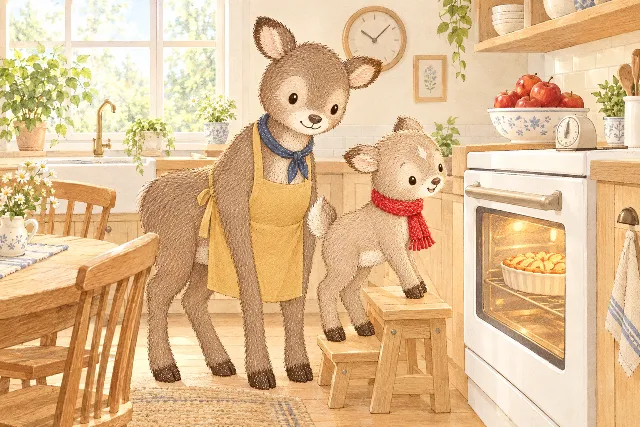
Riko and the Cake in the Oven — family set
Children bake a cake with Riko and his dad and notice that waiting is hard; when Riko gets bored, they see him find something to do (drawing a cake, building one from blocks) and k…
Explore →
Riko and the Kite That Waited for the Wind — family set
Children feel sad with Riko when his kite won't fly; they try putting the feeling into words, noticing the reason (no wind) and waiting patiently with Mum, and see Riko say "Come a…
Explore →