

Choosing an age-appropriate story: Looking beyond the age label
Look beyond an age label when choosing stories: language, subject, emotional intensity and individual participation matter.
An “ages 5–6” label does not mean every child in that range will read or understand a story in the same way. Age information helps with discovery; the language, subject and form of participation complete the choice. A book read aloud together may make different demands from one a child reads independently. Choosing an age-appropriate story therefore means looking at the actual content and the child's experience after checking the label. A few concrete considerations can help.
Use the age range as a starting point
NAEYC considers developmentally appropriate practice alongside individuality and context; the framework's primary scope is birth through age eight [1]. It helps us leave room for different forms of participation among children of the same age. Suggestions for older children need to be considered within their actual experience and the relevant content. An age label is not a developmental test result or a threshold of competence.
Filtering a library by age may make the first step easier. Then look at a sample scene. Are the words familiar? Can the connections between events be followed? How much explanation is needed? A child who cannot read independently may still participate in a story shared with an adult. Equally, reading every word does not establish readiness for emotional intensity. Reading ability and suitability are separate considerations.
Assess the language in a real scene
Length is not just a page count. One page may introduce several people, unfamiliar words or changes of event. Explaining a new word is possible, but if every sentence needs an extended explanation, consider another option. Following the instructions and narrative is an important condition for participation. You do not need to test vocabulary to consider suitability.
Turkey's 2024 Ministry of National Education preschool programme considers language, play and family participation within learning experiences [2]. It is an official educational programme, not an endorsement of a platform or evidence for a particular book. A practical family suggestion is to allow different kinds of contribution. Pointing to a picture, using a short sentence or responding with a sound can all be observed; participation need not always take the same verbal form.
Consider the subject and emotional intensity together
Stories involving loss, separation, fear or disagreement may be experienced differently depending on a child's questions. The presence of a subject does not itself make a story unsuitable; how it is presented matters. A reassuring ending does not make every scene comfortable for everyone. Parents can look ahead with their child's sensitivities in mind. If distress arises during use, stopping and revising the choice are possible.
Do not dismiss the child's interests. Returning to a familiar character or choosing a story labelled for a younger group is not automatically a problem. A shared-reading choice may differ from adult expectations. Families still maintain boundaries around suitability. Offer a few reviewed options while letting the child participate in the decision; they need not carry the whole responsibility for choosing.
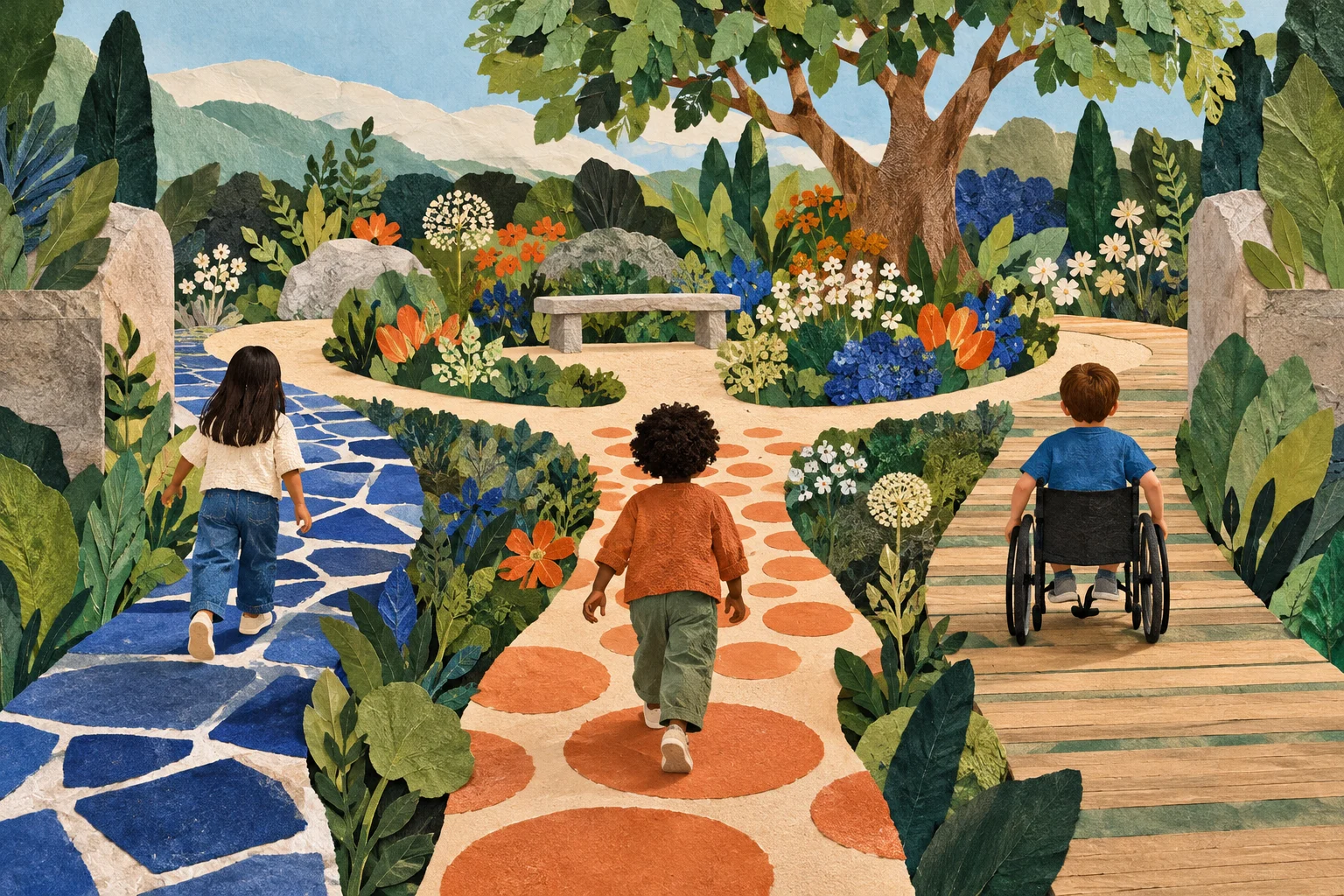
Pictures and digital features matter too
Even when a story's wording is straightforward, intensive interaction may pull attention elsewhere. Takacs, Swart and Bus examine different effects of multimedia and interactive features in digital stories [3]. This makes it useful to check how sound and movement are used. Supporting the narrative differs from simply generating repeated taps. Families can reconsider a choice by observing what the child actually engages with.
Looking at one scene and listening to the response can provide a brief trial. “What can you see here?” or “Which part could we revisit to understand this?” may help. Do not score the encounter. If the child is tired, do not base the whole decision on that day's response; observation in other circumstances may be informative. Every encounter need not become an assessment of fixed duration.
A final check when choosing a collection
Review the age information, description and actual contents of Story Globally collections. A book, colouring activity and puzzle sharing a story world does not mean every child will engage equally with all three. Mercan's narratives about family memories can be shared with different questions and adult support. If the child prefers simply to look at a scene, keep that encounter brief and return to another detail later.
A suitable choice aims to find an experience the child can understand and participate in. The age label begins the search; language, emotional intensity, interest and adult support complete it. A useful practical measure is whether the child has room to express a thought and ask for help or a break. Using Story Globally collections with this observation offers more insight than drawing a definite developmental conclusion from a label.
References
- NAEYC (2020). Developmentally Appropriate Practice: A Position Statement. View source
- Millî Eğitim Bakanlığı (2024). Türkiye Yüzyılı Maarif Modeli Okul Öncesi Eğitim Programı. View source
- Takacs, Z. K., Swart, E. K. & Bus, A. G. (2015). Benefits and pitfalls of multimedia and interactive features in technology-enhanced storybooks: A meta-analysis. Review of Educational Research, 85(4), 698–739. View source
Continue the topic with a story
Turn what you read into a story, a coloring page and a short chat with your child.

Carlos and the Box Boat — family set
Children see Carlos choose his torn box over a brand-new bed; they learn to read an animal's feelings from what it does, think about why an old, loved object matters, and discover …
Explore →
Riko and the Cake in the Oven — family set
Children bake a cake with Riko and his dad and notice that waiting is hard; when Riko gets bored, they see him find something to do (drawing a cake, building one from blocks) and k…
Explore →
Riko and the Kite That Waited for the Wind — family set
Children feel sad with Riko when his kite won't fly; they try putting the feeling into words, noticing the reason (no wind) and waiting patiently with Mum, and see Riko say "Come a…
Explore →